.svg)
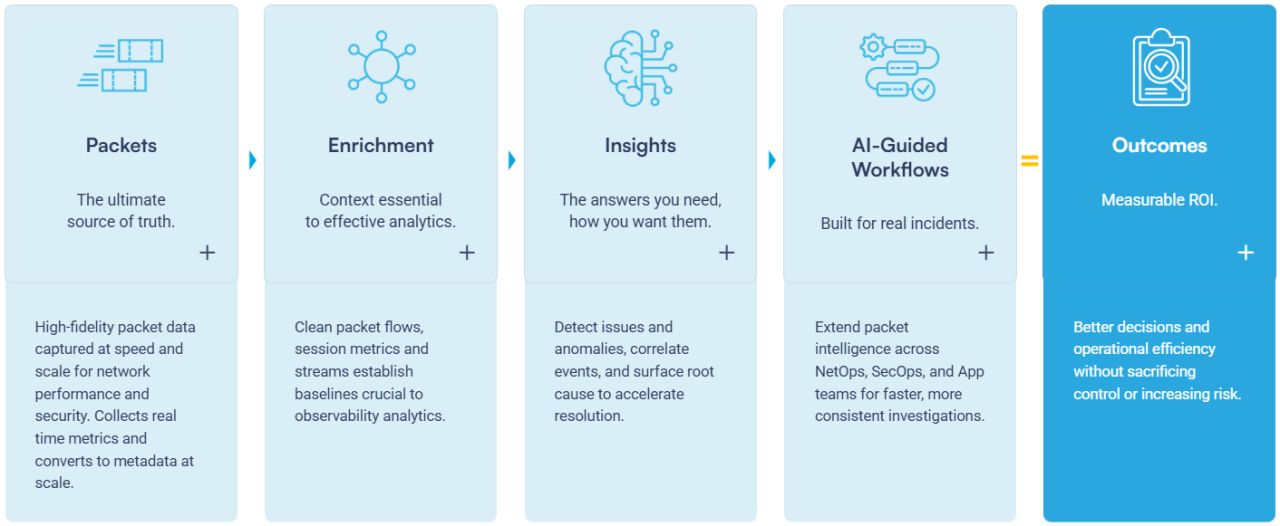
I am of course biased, but as a Network Architect, I believe the frame and the packet are the most fundamental source of truth. Packets tell us what happened on the network, as well as where and when it took place. The problem is, there are lots of packets, potentially one every 6.7 nanoseconds on a 100G interface.
Last week I posted about how cPacket’s architecture enables high-speed capture, and storage of packets. This week, I want to talk about what we can do with this information and how it enables Observability, through AI, as well as Network and Security Operations.
AI Insights: The cPacket architecture provides third party verified, lossless, clean packet captures. With the information, metadata can be extracted, and baselines can be created. Using the cPacket API and Model Context Protocol (MCP), this information can be integrated into existing Network and Security Operations workflows.
Network Operations: For Observability to truly provide value the very first thing we need is confidence in our data. As above, if packets and frames are the source of truth, cPacket architecture allows us to capture them with a high level of confidence. Sampling is not required; micro-bursting can not only be identified but also analysed to better understand the cause and impact.
Security Operations: Packet information can be shared with Network Detection and Response (NDR) solutions to allow for DDoS detection, forensic analysis and exfiltration detection and prevention. The cPacket architecture allows for compliance in regulated environments.
All these capabilities combine to provide observability outcomes, such as event correlation, predictive analytics, and root cause analysis, which is built on high quality data and is searchable using natural language queries.